

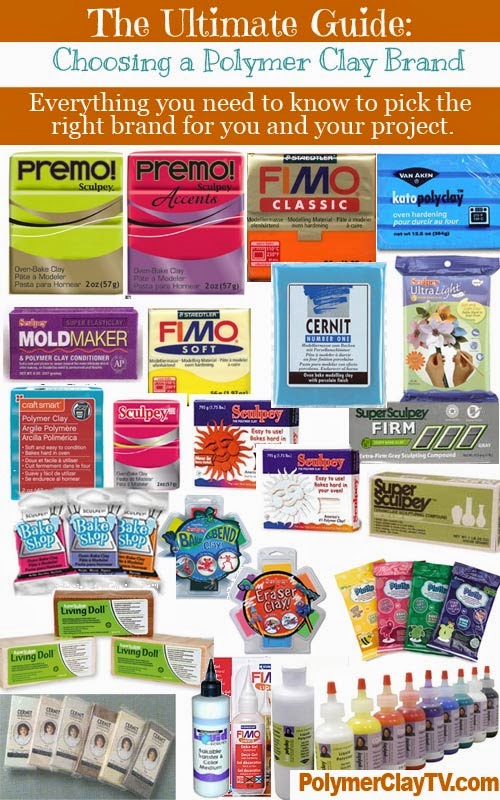

The Right Polymer Clay Brand for Your Project
Choosing polymer clay is easier when you start with the finished project—not the brand name. A clay that feels wonderfully soft in the package may be perfect for a child’s ornament but a poor choice for thin earrings that need to survive drops, hugs, shipping, and everyday wear.
The best polymer clay is the clay that is easy for you to buy fresh, condition comfortably, and use successfully for the specific project you are making. For most makers, that means starting with one dependable all-purpose clay rather than buying every brand at once.
For most clay earrings, jewelry, color mixing, and everyday projects, choose Premo Sculpey. For a softer clay with a matte finish and excellent flexibility after baking, choose Soufflé. Both are strong choices for wearable work when cured correctly. Premo is designed to cure at 275°F for 30 minutes per 1/4 inch of thickness.
Quick Answer: Best Clay by Project
Best Polymer Clay for Earrings:
For polymer clay earrings, use a clay that is strong after baking and slightly flexible in thin areas. That flexibility matters when an earring catches on hair, is squished in a hug, drops on the floor, or travels through the mail.
Best first choices:
-
Premo Sculpey: The most versatile starting point for earring makers. It offers a large color range, including mica, glitter, pearl, metallic, and translucent options.
-
Soufflé: Excellent for matte, modern, lightweight-looking earrings. It conditions easily, hides fingerprints well, and has a soft suede-like surface after baking.
-
Cernit Number One: A strong general-purpose alternative, especially if you like a somewhat firmer clay body. Its opaque line is suitable for jewelry, miniatures, figures, and reproductions.
-
FIMO Professional: A good choice for makers who prefer a firmer clay for clean-cut geometric designs, detailed veneers, or cane work.
Avoid using Original Sculpey, Sculpey III, Bake Shop, or unknown generic clay as the only clay in thin wearable earrings. They can be useful for practice or casual projects, but they are not the dependable professional choice for thin dangles, connectors, or delicate jewelry components.
The Core Clay Brands:
Premo Sculpey
Best for: Earrings, jewelry, color mixing, veneers, mica-shift, general-purpose work, and many cane designs.
Premo is Create Along’s best all-around recommendation because it balances workability, strength, availability, and color selection. It is softer than FIMO Professional but firmer and more durable than Sculpey III. It also has a broad selection of effect colors, formerly packaged under the Premo Accents name.
Choose Premo if you want to buy one clay line and make a wide range of projects without constantly changing materials. It is especially good for makers who want professional results without fighting an extremely stiff clay.
Soufflé by Sculpey
Best for: Matte earrings, flexible components, mokume gane, makers with cold hands, and makers who dislike fighting stiff clay.
Soufflé is soft, easy to condition, opaque, and distinctively matte after baking. Its suede-like surface accepts paint and marker well, and it hides small fingerprints better than smoother clay lines. It also remains notably flexible after baking, which makes it a favorite for thin earrings and pieces that need a little give rather than a brittle snap.
Its color range is more muted than Premo’s, and it is not the first choice when you need translucents, glitter, mica, or a high-polish finish. Choose it for the finish and feel—not for every special effect.
FIMO Professional
Best for: Caning, millefiori, crisp geometric work, precision sculpture, and repeatable color mixing.
FIMO Professional is firmer than Premo and Soufflé, so it resists distortion while you build detailed patterns or reduce canes. That firmness is an advantage when you want sharp edges and clean shapes. It can be harder to condition, particularly for makers with cold hands, hand pain, or limited grip strength.
Use FIMO Professional when crisp control matters more than easy conditioning. It is not the most relaxing clay to start with, but it rewards careful work.
FIMO Soft and FIMO Kids
Best for: Casual projects, beginners, classrooms, and children.
FIMO Soft is easy to handle and available in many colors, but it can become too soft for fine detail in warm hands. FIMO Kids is designed for younger makers and is a practical choice when ease of use matters more than professional-level durability.
These are enjoyable clays for learning, simple figures, chunky beads, and family craft time. For thin jewelry, move up to Premo, Soufflé, Cernit, or FIMO Professional.
Cernit
Best for: Jewelry, dolls, miniatures, translucent-looking work, pearl effects, and artists who like many specialty color lines.
Cernit is not one single clay formula. Cernit Number One is the opaque general-purpose range; Cernit Opaline has a semi-translucent, porcelain-like character; and Cernit Doll provides skin-tone colors with a semi-translucent look.
Choose Cernit if you want strong clay with excellent options for dolls, pearly finishes, faux stone, scales, translucent color effects, and jewelry. It can become soft or sticky if overworked in hot hands, so cool your clay, tools, or work surface when necessary.
Pardo
Best for: Specialty jewelry, luminous colors, translucent work, and makers who want a distinctive clay body.
Pardo is made by Viva Decor and includes jewelry, transparent, and professional art clay lines. Pardo Jewelry Clay is smooth and easy to form, with gemstone-inspired, glitter, neon, and transparent colors.
For special translucency, look specifically at Pardo’s transparent and translucent products rather than assuming every Pardo color will give the same effect. Pardo Transparent is intended for translucent effects and is cured at 248°F for 30 minutes according to Viva Decor’s instructions.
Cosclay
Best for: Bendable sculptures, stop-motion characters, posable figures, cosplay components, and durable sculptural parts.
Cosclay is a flexible polymer clay hybrid designed to remain flexible after curing. Its intended uses include dynamic figures, stop-motion characters, sculptures, and pieces that need to resist damage during handling or shipping.
Cosclay is not the automatic best choice for every earring maker. In very thin, broad shapes, its flexibility can make a piece feel too floppy rather than nicely resilient. Use it when bendability is the actual design requirement, not just because flexible sounds better.
Sculpting and Doll Clay:
Super Sculpey
Best for: Practice sculpture, display figures, armatures, and non-wearable figurines.
Classic beige Super Sculpey is easy to sculpt and useful for display pieces that will not receive heavy handling. It is not the best choice for a thin, durable sculpture that needs to survive rough use.
Super Sculpey Firm or Medium
Best for: Master sculpts, molds, action-figure prototypes, and sharp detail.
The gray sculpting clays are designed for sculptors who need detail retention. They are excellent choices for a baked master that will be molded and reproduced. If you make figurines, prototypes, fantasy creatures, or detailed sculptures, these are worth testing.
Cernit Doll, FIMO Professional Doll Art, and ProSculpt
Best for: Dolls, OOAK figures, realistic skin effects, and skin-tone sculpting.
For dolls, choose a clay line with suitable skin colors and slight translucency. Cernit Doll includes semi-translucent skin-tone colors, which help cured work look less flat than an opaque beige clay.
Clay for Kids and Casual Projects:
Original Sculpey
Best for: Big simple forms, painted plaques, beginner experimentation, classroom projects, and mixed-media elements.
Original Sculpey is very soft and comes in white, terra cotta, and granite-like colors. It works well when you need a paintable baked object, but it should not be used for thin jewelry, load-bearing shapes, or projects requiring strength.
Think of it as a polymer alternative to simple pottery-style craft projects—not as the clay used for professional earrings.
Sculpey III
Best for: Kids, beginners, chunky beads, school projects, and learning basic techniques.
Sculpey III is soft and colorful, but thin baked pieces can be brittle. Use it for casual projects, practice, and thicker forms. If you love one of its colors, it can be blended into a stronger clay such as Premo or Soufflé for a more durable result.
Sculpey Ultralight
Best for: Lightweight fillers, large beads, mixed-media work, painted pieces, and carving.
Ultralight bakes hard but remains very light. It is useful as an internal core for large polymer clay beads or sculptures, especially when you do not want the final piece to be heavy. It can be painted, marked, or carved after baking.
Specialty and Legacy Clays:
Kato Polyclay
Kato Polyclay was long known for its stiffness, strength, crisp caning performance, and satin-like cured finish. However, the original product line has been discontinued, so it should not be the main recommendation for readers starting a new clay practice. Remaining inventory may still appear at specialty shops or liquidation sales.
If you find fresh Kato and enjoy firm clay, it may still work beautifully. For a currently easier-to-source substitute, try FIMO Professional for cane work or Premo for a more user-friendly all-purpose clay.
FIMO Leather-Effect
FIMO Leather-Effect created a fibrous, leather-like finish that could be used for cuffs, small bags, tassels, and sewable baked sheets. It was discontinued in 2025, so mention it only if readers encounter remaining stock.
Liquid Polymer Clay
Liquid clay is useful when you need to bond clay layers, make faux enamel, fill molds, create transfers, add a glaze-like surface, or soften very stiff polymer clay.
-
Translucent Liquid Sculpey: Useful as a softener, adhesive layer, and tintable medium, though it does not produce the clearest glass-like finish.
-
Liquid Sculpey Clear and colored liquids: Useful for molds, inclusions, decorative effects, and tinted surfaces.
-
Bake + Bond: Use this when you need extra insurance that unbaked clay will adhere to baked clay.
-
FIMO Liquid and Kato Liquid: Traditionally favored for clearer, glassier effects, though Kato availability is now inconsistent because the original line was discontinued.
Always test any liquid-clay finish on a sample tile before applying it to finished jewelry. Thickness, pigments, cure temperature, and oven accuracy all affect clarity and gloss.
Buy Fresh Clay and Bake It Correctly
Clay quality is not only about the brand. A great brand that has sat on a hot shelf for years can be hard, crumbly, or unpleasant to condition. Polymer clay does not “dry out” like air-dry clay, but age, storage, and plasticizer migration can make it less workable.
Buy from sellers with regular inventory turnover whenever possible. When you receive a new brand or color, make a small test tile before starting a major project.
Most importantly, use an oven thermometer. Household oven dials are often inaccurate, and underbaking is one of the biggest reasons polymer clay seems weak or brittle. Follow the manufacturer’s temperature and time instructions for the exact line you are using; do not assume every brand has the same curing requirements. Premo, for example, specifies 275°F and 30 minutes per 1/4 inch thickness.
The Short Version
If you only want to buy one clay today, buy Premo.
If you make matte earrings or need easy conditioning and flexibility, buy Soufflé.
If you make intricate canes and want crisp detail, try FIMO Professional.
If you make dolls, translucent effects, or specialty jewelry, explore Cernit.
If your sculpture must bend after baking, use Cosclay.
And if you are buying clay for children or casual crafts, choose FIMO Kids or Sculpey III—but do not expect them to perform like professional jewelry clay.